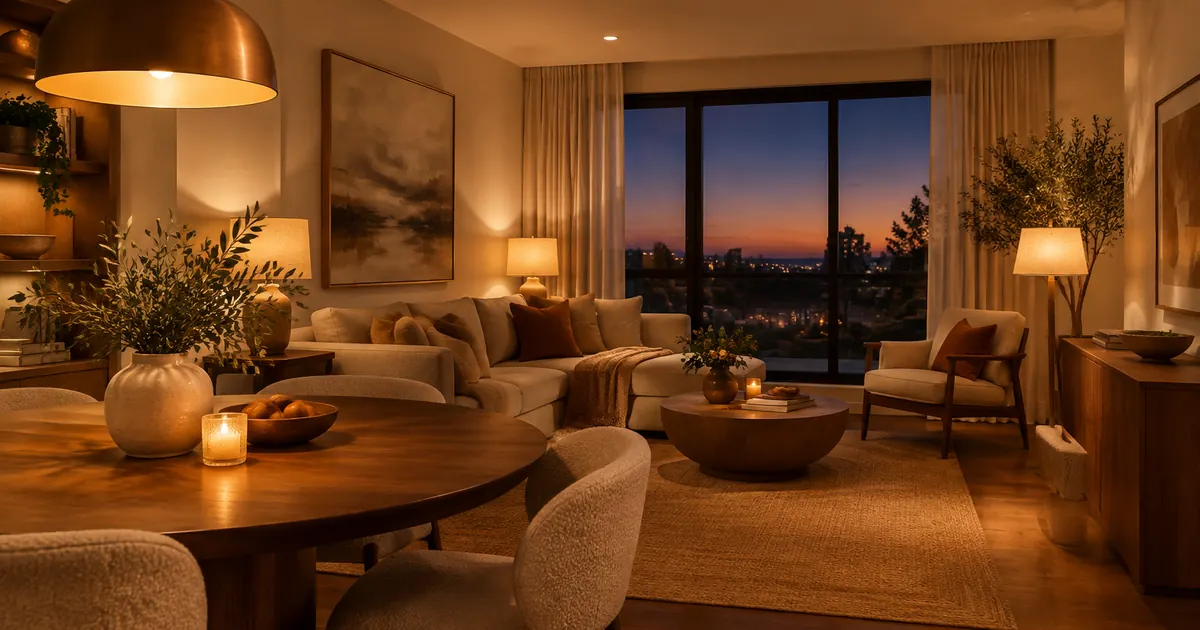
Most rooms are lit wrong in exactly one way: everything depends on a single ceiling fixture. The room is either a cave or an operating theater, with nothing in between. Professional designers solve this with layers — three kinds of light in every room — and the fix is more achievable than it sounds.
Layer One: Ambient Light
Ambient light is the base layer — the even glow that lets you walk through the room safely. In most homes this is the ceiling fixture, and the upgrade path is simple: make it dimmable. Our 6-inch dimmable recessed kit disappears into the ceiling and spreads even light, which is exactly what ambient light should do — be present without being noticed.
If the room has a central fixture instead, a statement piece earns its keep: the rustic metal and wood chandelier provides ambient light while doubling as the room's anchor. One fixture, two jobs.
Layer Two: Task Light
Task light is bright, directional and positioned where work happens: the kitchen island, the bathroom mirror, the reading chair. This is the layer most homes are missing.
Bathrooms need vertical light at the mirror — light from above casts shadows that make shaving and makeup genuinely harder. A 24-inch dimmable LED vanity bar mounted at eye level fixes this; the dimming matters more than you'd think, since 3am trips should not require full brightness.
Over islands and tables, pendants do the job. The 14-inch industrial pendant hangs where light is needed and marks the zone — a pendant over a table says "this is where we eat" in a way no ceiling fixture can.
Layer Three: Accent Light
Accent light is the layer that makes a room feel designed: a wall lantern washing light up a dark hallway, a fixture that highlights art or architecture. Outdoors, the motion-sensor wall lantern is accent and security in one — light where you fumble for keys, and a deterrent when you are away.
The Temperature Rule
Layered light fails when the temperatures clash. Pick one color temperature for living spaces — 2700K to 3000K, the warm range — and hold every fixture to it. Mixing a cool 4000K bulb into warm fixtures is the most common lighting mistake we hear about, and it is why some rooms feel "off" without an obvious cause. All Qenvo LED fixtures ship warm-tuned for exactly this reason.
Smart Control, Applied Sparingly
Automation earns its keep on the fixtures you forget: the smart ceiling fan that schedules itself off after everyone leaves, the outdoor lantern that handles itself. Automating every bulb adds complexity for no gain — automate the forgettable fixtures, switch the rest.
Start With One Room
Do not light the whole house at once. Pick the room that bothers you most after dark, add its missing layer — usually task light — and live with it for a week. The difference converts more skeptics than any argument, and our lighting collection is organized by layer to make the second room easier.
Sizing Fixtures to the Room
Two quick formulas prevent the most common lighting mistakes. Chandeliers: add the room's length and width in feet; the sum, in inches, is the fixture's diameter — a 12x14 dining room wants a 26-inch chandelier, which is exactly the class of our 24-inch rustic chandelier. Pendants over islands: hang them 30-36 inches above the counter, one pendant per 2-3 feet of island, so a 6-foot island takes two or three. Over tables, center the pendant and keep 30 inches of clearance above the tabletop.
Dimming: The Underrated Feature
Dimmable fixtures earn their place twice — full brightness for tasks, low light for evenings — but only when the dimming is smooth. Cheap LED dimming stutters and flickers at the low end. Every dimmable fixture we ship is tested down to its low end, because a vanity bar that flickers at 20% is a fixture that gets switched off instead of dimmed. Pair dimmable fixtures with dimmable bulbs and a compatible dimmer switch; all three parts of that sentence matter.
Outdoor Light: The Two Jobs
Exterior fixtures do security and welcome at once, and the motion-sensor version of the wall lantern balances them: bright when someone approaches, dim or off otherwise. Mount lanterns at eye level — roughly 66-72 inches to the center of the fixture — flanking the door, one per side if the entry is wide enough. A single lantern centered over the door works on narrower entries. Either way, choose fixtures rated for wet locations; covered porches need "damp rated" at minimum, exposed walls need "wet rated."
The Fan Exception
Ceiling fans are lighting and air movement in one fixture, which makes them the workhorse of bedrooms and living rooms. The 52-inch smart fan covers most bedrooms and mid-size living rooms; larger rooms want 60 inches or two fans. Blade span matters more than style — an undersized fan runs on high all summer and still moves less air than a properly sized fan on medium. Winter tip: reverse the motor direction and the fan pushes warm air down from the ceiling, which is the cheapest heating efficiency upgrade in the house.
Living With It for a Week
After installing a layered plan, live with it before adding more. Note which layer you reach for at which hour — most people discover their ambient layer is over-dimmed and their task layer is under-used. Adjust, then stop. The goal is a room that needs no thought after dark, and the lighting collection is organized by layer so the second room takes half the time of the first.