No fixture in the house works harder than the kitchen faucet. It is touched by every hand in the house, dozens of times a day, often with those hands full or dirty. When it is time to replace one, the choices look overwhelming — but only four decisions actually matter.
Decision One: How Many Holes Is Your Sink?
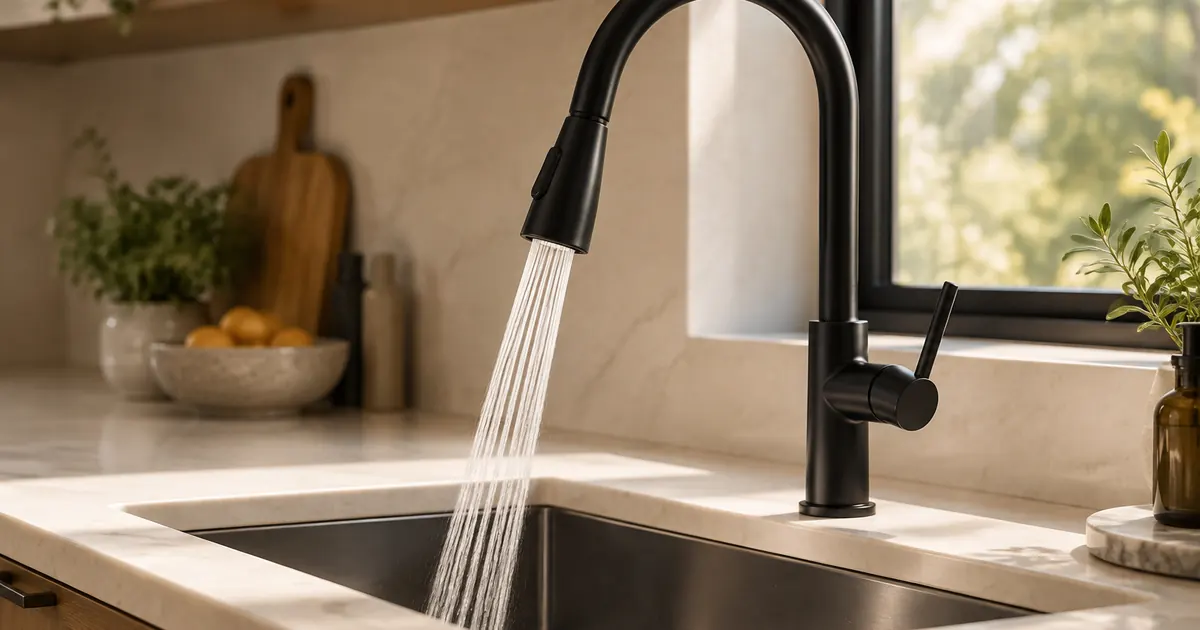
Look at your countertop. A single-hole faucet needs one opening; older setups often have three or four holes for separate handles and sprayers. Single-hole faucets like our matte black pull-down faucet cover unused holes with an optional deck plate — check the box for the included plate before assuming you need a new sink. Adding a compact water filter faucet later uses one of those spare holes, which is worth planning for.
Decision Two: Spout Height and Reach
High-arc spouts (10+ inches of clearance) fit stock pots and make filling buckets possible — the practical reason they dominate modern kitchens. Measure the space between your faucet and any window shelf or cabinet above; a high arc needs about 12 inches of clearance. Reach matters too: the spout should pour into the center of the bowl, not the back of it. Our faucet's 8.5-inch reach covers standard double-bowls from the center hole.
Decision Three: The Sprayer
Pull-down sprayers (the head pulls down into the sink) have won the market, and deservedly — the spray head follows your hand instead of requiring you to guide the pot under a fixed sprayer. What separates good from cheap: retraction. The head should snap back on its own weight, fully, every time. Test this in the first week; a sprayer that dangles is the number-one complaint about bargain faucets, and it is the first thing we test in QC.
Decision Four: Finish — Looks and Durability
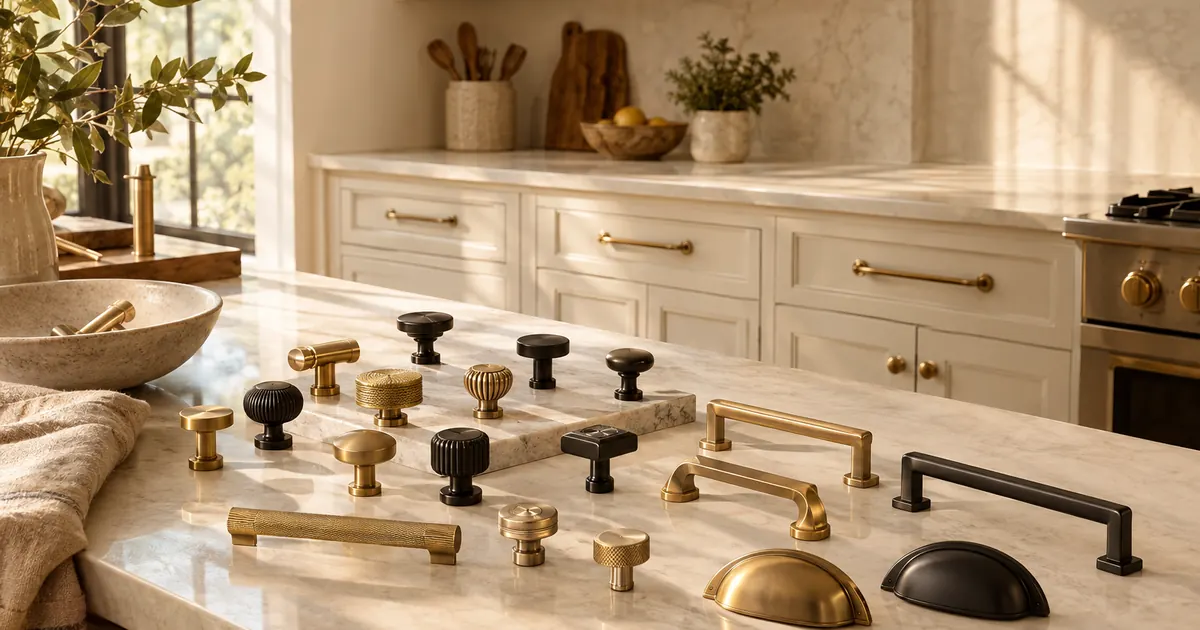
Matte black hides water spots better than any finish and coordinates with the hardware families in our cabinet collection. Chrome and satin nickel are the easiest to keep spotless but show every fingerprint. Brushed brass and gold finishes read as luxury and are surprisingly durable when the finish is physical vapor deposition (PVD) rather than paint — our brushed brass bathroom faucet uses PVD, which is why it survives daily wiping without wearing through.
Installation Reality Check
A faucet swap is a 45-minute job with a basin wrench — the odd-looking tool that reaches up behind the sink. Shut off the valves under the sink (they exist; they may be stiff), have a towel down, and hand-tighten everything before the final quarter-turn with the wrench. If your shutoff valves won't close, that is your cue to add a plumber — replacing the valves is a small job that prevents a flood.
The Bathroom Parallel
The same logic applies downstairs: our 12-inch rain shower head screws onto any standard 1/2-inch arm in ten minutes, and the ceramic pedestal sink replaces like-for-like when the rough-in plumbing already exists. Fixtures follow standards, which is the quiet miracle of US plumbing — measure the standard, and everything fits.
Valves: The Part That Decides Lifespan
Inside every faucet is a valve, and the valve type predicts the faucet's lifespan better than any finish or brand name. Ceramic disc valves — standard in our pull-down kitchen faucet and brushed brass bathroom faucet — seal with polished ceramic plates that outlast rubber washers by decades and never drip until they fail, at which point the cartridge swaps out in ten minutes. Compression valves (the old rubber-washer type) drip on schedule and teach an entire generation to keep a wrench under the sink.
When comparing any two faucets, the question to ask is not "what is it made of" but "what is the valve." A solid brass body with a ceramic cartridge is the combination that outlives its warranty by twenty years.
Water Pressure: What High Pressure Actually Requires
Rain shower heads illustrate the physics: a 12-inch head like our stainless rain shower head spreads the same water flow over four times the area of a standard head, which is why cheap large heads feel like mist. The fix is engineering, not marketing — pressure-compensating channels and properly sized inlets keep the flow forceful across the full face. If your home's water pressure is genuinely low (test: fill a one-gallon jug in under 30 seconds from a standard tap), choose a smaller head or one explicitly engineered for high pressure.
The Filter Faucet Decision
A dedicated water filter faucet solves the problem under-sink filter attachments create: filtered water on demand without routing every dishwater gallon through a filter cartridge. The compact height clears most window sills and the flow is dedicated — drinking and cooking water only, which extends filter life from months to a year. Check the cartridge spec, not the faucet: the faucet is a thirty-year purchase, the cartridge is a consumable with a published capacity in gallons.
Disposals: The Quiet Spec That Matters
Garbage disposals are rated in horsepower, but the spec that determines satisfaction is sound insulation. Our 3/4 HP quiet disposal wraps the grind chamber in sound-dampening material, which is the difference between a kitchen conversation and a kitchen interruption. The 3/4 HP class handles a family kitchen's daily load; the 1/2 HP class struggles with bones and fibrous vegetables, and the 1 HP class is for households that cook every night and host on weekends.
Measure Twice, Order Once
The five measurements that prevent every fixture return: sink hole count, hole diameter (standard is 1-3/8 inches), spout reach, spout clearance, and the distance from the wall to the center of the shower arm. All five take two minutes with a tape measure, and every product page in our kitchen and bath collection lists the matching numbers in its spec sheet.