Cabinet hardware is the jewelry of the kitchen — and like jewelry, the wrong piece is distracting in a way nobody can name but everybody feels. You will touch these pieces fifty times a day for a decade, so the choice deserves ten minutes of actual thought. Here is how to make it.
First, the Fit Question
Before style, before finish: hole centers. If you are replacing existing pulls, measure the distance between screw holes, center to center. The most common spacings are 3 inches (76mm), 3.5 inches (89mm), 3.15 inches (80mm) and 4 inches (102mm). Our satin nickel bar pull uses the 3.15-inch (80mm) standard; the leather cabinet pull uses 4-inch centers. Every Qenvo product page lists hole centers in the specs — match them and installation is two screws, no drilling.
Knobs need only one hole, which makes them the easy retrofit. If your doors currently have knobs and you want pulls, you will drill new holes — worth it for drawers, which is where pulls genuinely perform better.
Knobs for Doors, Pulls for Drawers
The rule professionals follow: pulls on drawers, knobs or pulls on doors. Drawers demand a gripping motion — especially the deep drawers that hold pots — and a pull gives your whole hand something to hold. A polished chrome cup pull on a drawer front is both ergonomic and period-appropriate for traditional kitchens. Doors swing, so a knob at the corner works fine and costs less per opening.
The Finish Family Question
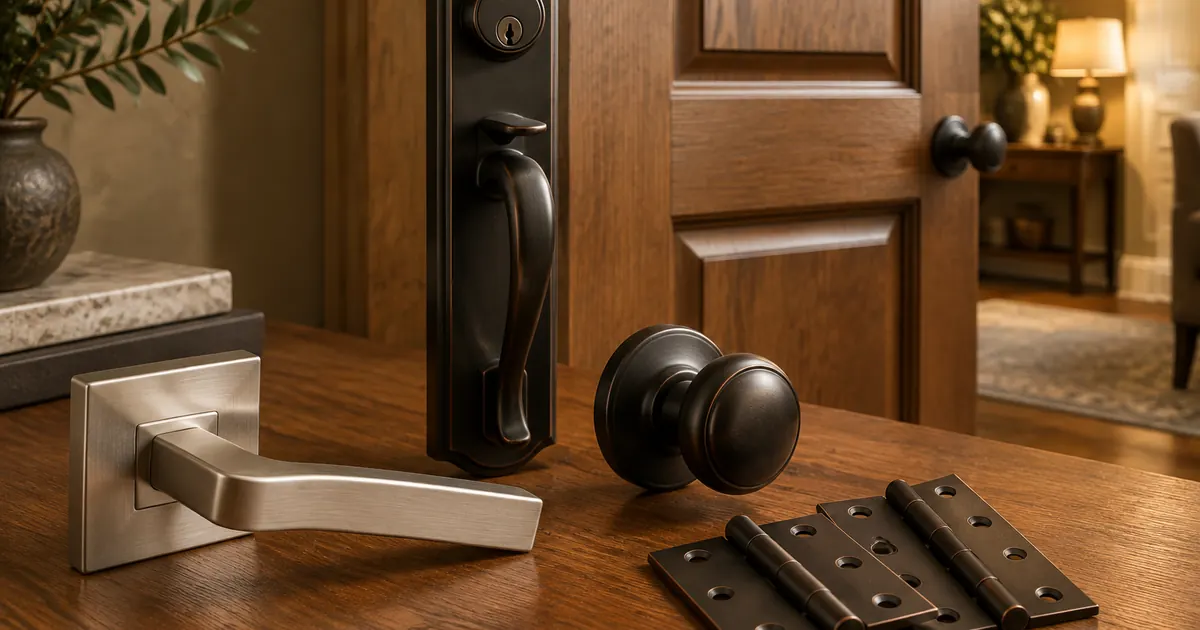
Here is the mistake to avoid: buying hardware one piece at a time from different sources and ending up with four slightly-different "matte blacks." Finishes vary enormously between manufacturers. The solution is to buy from one finish family. Our matte black pieces — the metal cabinet pull, the leather pull, the matte black kitchen faucet — are designed to match across categories, so your hardware and fixtures read as one decision instead of five.
Mixed Metals Are Allowed (With a Rule)
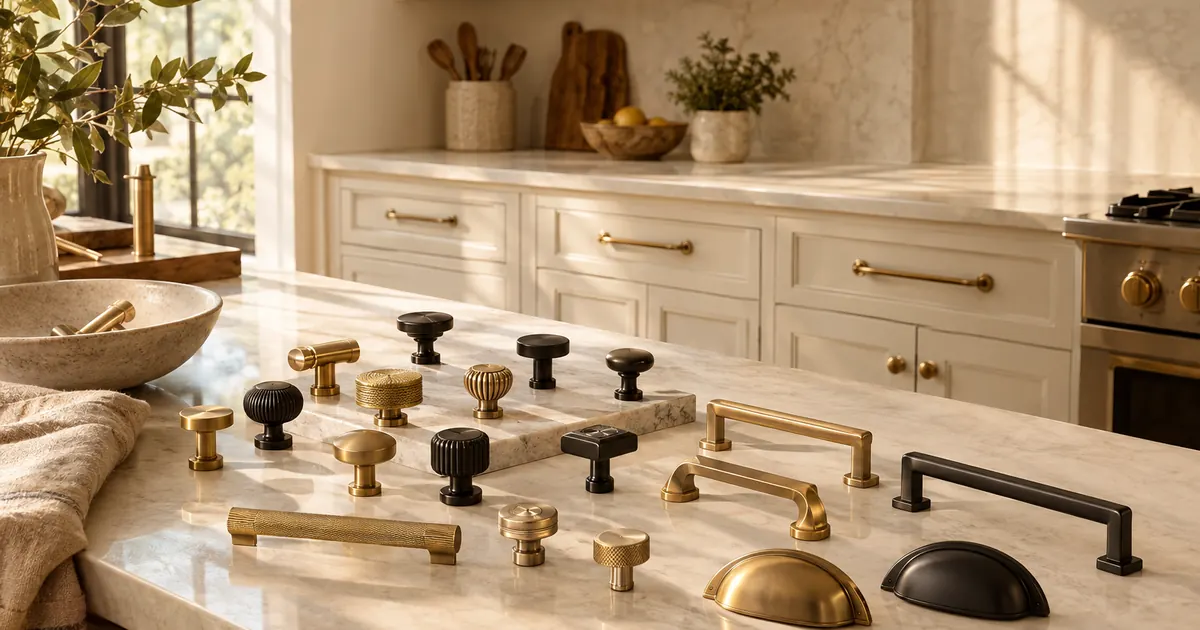
Mixing finishes is not the sin it once was. The rule that keeps it coherent: one finish dominates, one accents. Brushed brass hardware on matte black cabinets, or black hardware on natural wood — pick a leader. Two metals of similar weight (brass and copper, chrome and nickel) fight each other. Metals of clearly different weight (brass and black) coexist happily.
Size and Projection
Two numbers matter beyond hole centers. Length: bar pulls on full-overlay drawers should span roughly a third of the drawer width — a 12-inch pull on a 36-inch drawer reads as a handle; on a 15-inch drawer it reads as a ladder. Projection: how far the piece stands off the surface. Under 1.25 inches and your fingers scrape the cabinet; over 1.5 inches and it snags sleeves. Both numbers are on every spec sheet we publish.
Order One Before You Order Twenty
Photos lie about finishes — screen calibration guarantees it. Order a single piece, hold it against your cabinets in your kitchen's actual light, and open a drawer with it. If it feels right, order the rest; our bulk pricing covers orders of ten or more of the same item. That single-sample step is the difference between a kitchen that looks finished and one that looks almost finished.
What Solid Hardware Feels Like
Weight is the honest test. Solid brass knobs and pulls carry a density that zinc castings cannot fake — pick up both and the difference is obvious in two seconds. Solid pieces machine cleanly: the threads are crisp, the screw seats fully, the piece does not flex when tightened. This is why our brass drawer knob weighs what it does, and why it will still be tight on the drawer after a decade of pulls. Hollow hardware loosens at the threads within a year or two; the metal simply is not thick enough to hold them.
Crystal adds another test: the cut. Real cut crystal has sharp facets that catch light individually; acrylic imitations have rounded, soft edges that read as plastic the moment light hits them. Our crystal cabinet knob pairs cut crystal with a solid nickel shank — the glass does the sparkling, the metal does the lasting.
The Leather Pull Exception
Leather pulls deserve their own paragraph because they behave differently. The matte black leather pull warms in the hand in winter instead of chilling it, which sounds trivial until you cook barefoot at 6am in February. The leather ages like a good belt — darker where hands land, softer with years. The mounting core is steel, so the structural life is the same as any pull; only the surface ages, and it ages well.
Planning a Whole-Kitchen Order
Count before you order: doors take one knob or pull each, drawers take one pull each, and a typical kitchen runs 20-30 pieces. Add two spares of whatever finish you choose — renovations always reveal one damaged cabinet, and matching a finish two years later is the hardest hardware problem in the house. Orders of ten or more of a single item qualify for project pricing; email us with quantities and we quote within a day.
Installation Notes That Save the Trim
Hand-tighten, then a quarter-turn with a screwdriver — brass threads strip if driven with power tools. For knobs, a drop of thread locker on the screw keeps them tight through years of daily use. And align pulls with a level before final tightening: the eye forgives a slightly wrong finish, never a crooked pull.